
What is an Automotive Wiring Harness
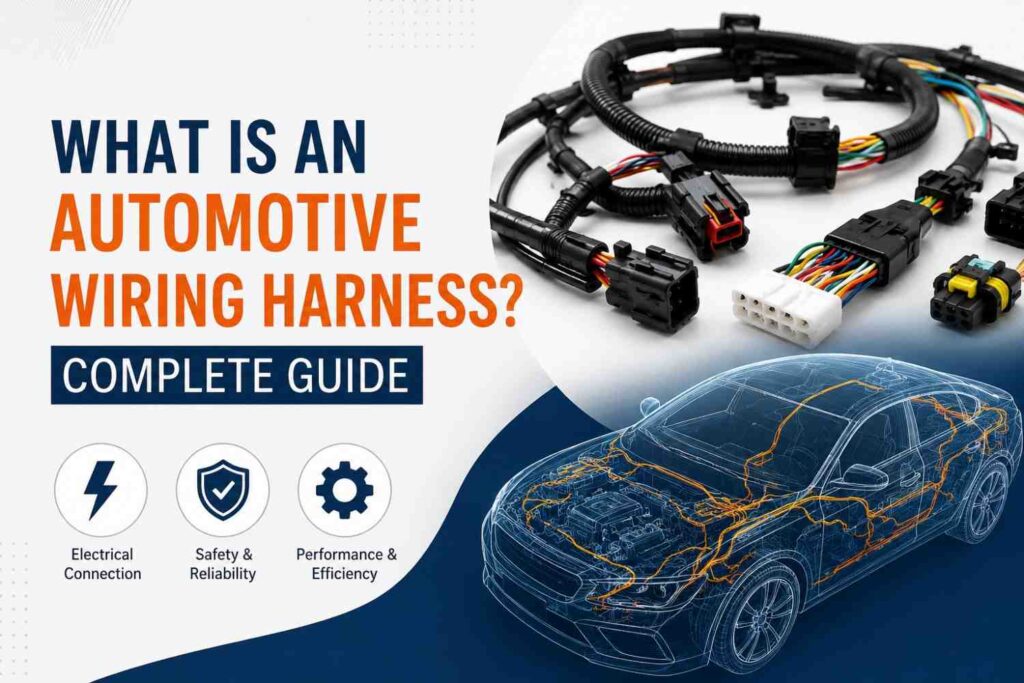
What is an Automotive Wiring Harness? Complete Guide
The automotive industry has transformed significantly over the last few decades. Modern vehicles are now equipped with advanced electronics, sensors, safety systems, infotainment units, and intelligent technologies that improve vehicle performance, comfort, and safety. Behind all these systems is one of the most important components of every automobile — the automotive wiring harness.
Today, the demand for reliable and high-performance wiring systems is growing rapidly, especially among Wire Harness Manufacturers in Pune, as Pune has become one of India’s leading automotive and manufacturing hubs. Automotive companies and OEMs require durable and precision-engineered wiring harnesses that can support modern vehicle technologies efficiently.
An automotive wiring harness acts as the central nervous system of a vehicle. It transmits electrical power and communication signals to different systems and components, ensuring smooth and uninterrupted vehicle operation. Without a properly designed wiring harness, modern vehicles would not be able to function effectively.
As electric vehicles (EVs), connected cars, and smart automotive technologies continue to grow, the importance of high-quality wiring harness solutions is becoming even greater. Manufacturers are now focusing on lightweight, durable, heat-resistant, and highly efficient wiring harness systems for the future of mobility.
What is an Automotive Wiring Harness?
An automotive wiring harness is a systematic assembly of wires, cables, connectors, terminals, sleeves, and protective coverings that transmit electrical power and signals throughout a vehicle.
In simple words, it is a complete electrical distribution system that connects different electrical and electronic components within an automobile.
Instead of using loose wires individually, manufacturers bundle multiple wires together into a structured harness system. This organized arrangement improves:
- Safety
- Durability
- Installation efficiency
- Maintenance
- Electrical reliability
The wiring harness connects various vehicle systems such as:
- Engine systems
- Lighting systems
- Battery systems
- Dashboard electronics
- Sensors
- Air conditioning systems
- Power windows
- Safety systems
- GPS and infotainment systems
Modern vehicles contain thousands of electrical connections. Managing these connections without a wiring harness would be extremely difficult, unsafe, and inefficient.
Automotive wiring harnesses are specifically designed to withstand:
- Heat
- Moisture
- Dust
- Vibrations
- Chemicals
- Harsh environmental conditions
This makes them essential for modern automotive manufacturing.
Why is Wiring Harness Important in Vehicles?
Automotive wiring harnesses play a critical role in ensuring the smooth functioning of modern vehicles. Almost every electrical operation in a vehicle depends on the quality and efficiency of the wiring harness.
Let us understand why they are so important.
1. Smooth Electrical Power Distribution
The wiring harness distributes electrical power from the battery to different vehicle systems efficiently.
It ensures:
Safety-critical systems such as:
Without an organized wiring system, electrical failures would become common.
2. Improved Vehicle Safety
One of the biggest advantages of wiring harnesses is enhanced safety.
Loose or exposed wires can cause:
- Short circuits
- Overheating
- Fire hazards
- System malfunctions
A wiring harness protects wires using insulation materials, sleeves, tapes, and protective coverings that reduce these risks significantly.
A wiring harness protects wires using insulation materials, sleeves, tapes, and protective coverings that reduce these risks significantly.
- Airbags
- ABS braking systems
- Reverse cameras
- Parking sensors
- Electronic control systems
all rely on secure wiring harness connections.
3. Simplifies Vehicle Manufacturing
Automotive manufacturers use pre-assembled wiring harnesses because they simplify the assembly process.
Benefits include:
- Faster installation
- Reduced labor costs
- Fewer wiring errors
- Improved manufacturing efficiency
This is especially important in large-scale automotive production facilities.
4. Easier Maintenance and Troubleshooting
An organized wiring structure helps technicians diagnose problems quickly.
Benefits include:
- Faster repairs
- Reduced downtime
- Simplified maintenance
- Easier fault identification
Color-coded wires and labeled connectors make servicing easier.
5. Supports Advanced Vehicle Technologies
Modern vehicles now include advanced technologies such as:
- Touchscreen displays
- GPS systems
- Smart sensors
- Advanced Driver Assistance Systems (ADAS)
- Electric vehicle battery systems
All these systems require highly reliable and complex wiring harness networks.
Types of Automotive Wiring Harnesses
Different automotive systems require different types of wiring harnesses depending on their function and application.
1. Engine Wiring Harness
The engine wiring harness connects all engine-related electrical components.
Applications:
- Fuel injectors
- Ignition systems
- Engine sensors
- ECU systems
- Cooling systems
Importance:
The engine harness ensures smooth engine operation, fuel efficiency, and proper sensor communication.
2. Chassis Wiring Harness
The chassis harness supports electrical systems connected to the vehicle frame and body.
Applications:
- Headlights
- Brake lights
- Turn indicators
- Dashboard systems
- Battery connections
This harness is designed to withstand heavy vibrations and harsh road conditions.
3. Body Wiring Harness
Body wiring harnesses manage interior electrical systems and passenger convenience features.
Applications:
- Power windows
- Central locking systems
- Interior lighting
- Seat adjustment systems
- Air conditioning controls
Luxury vehicles use highly advanced body wiring harness systems.
4. Dashboard Wiring Harness
Dashboard harnesses support dashboard electronics and infotainment systems.
Applications:
- Speedometers
- Warning indicators
- Audio systems
- Navigation displays
- Instrument clusters
Modern digital dashboards rely heavily on advanced harness systems.
5. EV Wiring Harness
Electric vehicles require specialized high-voltage wiring harnesses.
Applications:
Step 1: Design and Engineering
EV harnesses require:
- High-voltage insulation
- Heat resistance
- Lightweight construction
- Enhanced safety features
As the EV industry grows rapidly, demand for EV harness systems is increasing globally.
How Automotive Wiring Harnesses are Manufactured
The manufacturing process of automotive wiring harnesses requires advanced technology, precision engineering, and strict quality control.
Step 1: Design and Engineering
The process starts with detailed electrical design planning.
Engineers determine:
- Wire lengths
- Connector placement
- Voltage requirements
- Wire routing paths
CAD software is used for accurate harness design.
Step 2: Wire Cutting and Stripping
Automated machines cut wires to precise lengths and strip insulation from wire ends.
This ensures:
- Accuracy
- Consistency
- Faster production
Step 3: Terminal Crimping
Terminals are attached using specialized crimping machines.
Proper crimping ensures:
- Reliable electrical contact
- Reduced voltage loss
- Better durability
Step 4: Harness Assembly
Workers assemble wires, connectors, sleeves, tapes, and clamps according to the design layout.
Harness boards help maintain proper positioning.
Step 5: Testing and Quality Inspection
Every wiring harness undergoes strict quality testing such as:
- Continuity testing
- Voltage testing
- Resistance testing
- High-voltage testing
- Short-circuit testing
Quality checks ensure reliability and safety.
Step 6: Packaging and Delivery
After testing, harnesses are packed carefully and delivered to OEMs and automotive manufacturers.
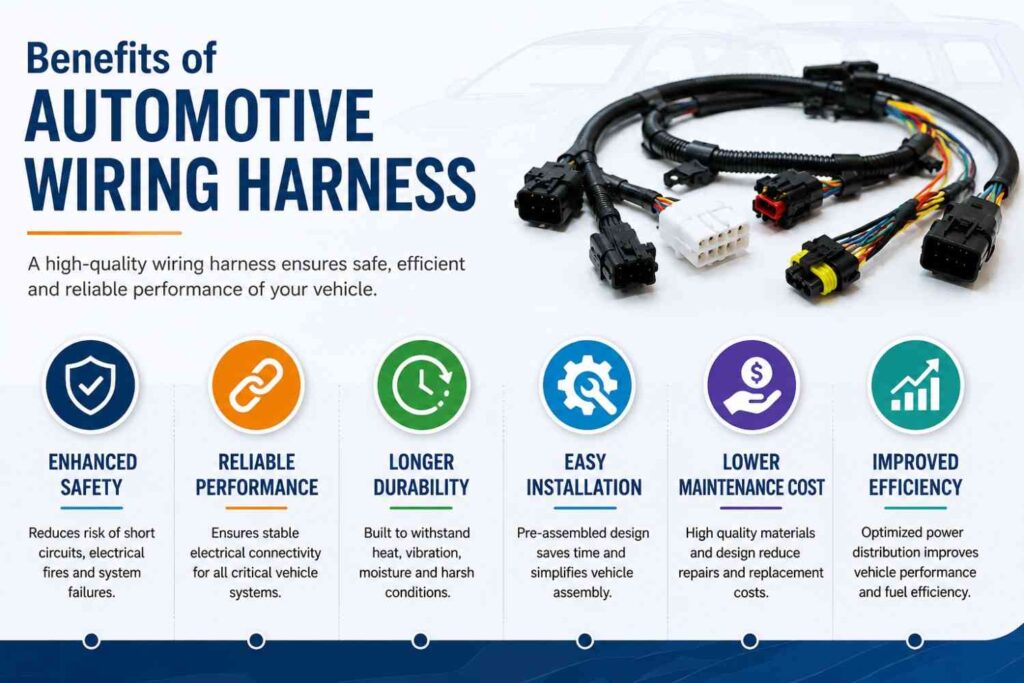
Benefits of High-Quality Wiring Harnesses
Better Durability
High-quality materials improve resistance to heat, vibration, and moisture.
High-quality materials improve resistance to heat, vibration, and moisture.
Improved Electrical Performance
Reliable wiring reduces energy loss and improves power transmission.
Reliable wiring reduces energy loss and improves power transmission.
Enhanced Safety
Proper insulation reduces the risk of short circuits and overheating.
Proper insulation reduces the risk of short circuits and overheating.
Lower Maintenance Costs
Durable harnesses require fewer repairs and replacements.
Durable harnesses require fewer repairs and replacements.
Longer Vehicle Lifespan
Efficient electrical systems improve overall vehicle performance.
Efficient electrical systems improve overall vehicle performance.
Why Choose the Right Wiring Harness Manufacturer?
Choosing the right wiring harness manufacturer is extremely important for quality, durability, and performance.
A reliable manufacturer provides:
- ISO-certified production
- Advanced testing
- Custom solutions
- Timely delivery
- Global quality standards
Sparsh Electronics is a trusted manufacturer of automotive and consumer product wiring harnesses in Pune. With expertise in precision manufacturing and electrical connecting assemblies, the company serves domestic and international markets with high-quality solutions.
Conclusion
Automotive wiring harnesses are one of the most critical components in modern vehicles. They ensure safe and efficient electrical communication between various automotive systems and help vehicles perform reliably under different operating conditions.
As automotive technology continues to evolve, especially with the rapid growth of Electrical vehicle wiring harness in pune, the demand for advanced, durable, and high-performance wiring harness systems is increasing significantly. From traditional vehicles to next-generation EVs, wiring harnesses will continue to play a major role in the future of mobility.
Choosing a trusted and experienced wiring harness manufacturer ensures better quality, safety, durability, and long-term performance for automotive applications.
FAQs
1. What is an automotive wiring harness?
An automotive wiring harness is an organized system of wires, connectors, and protective components used to transmit electrical power and signals throughout a vehicle.
An automotive wiring harness is an organized system of wires, connectors, and protective components used to transmit electrical power and signals throughout a vehicle.
2. Why is a wiring harness important in vehicles?
It improves electrical safety, organizes wiring systems, simplifies installation, and supports modern vehicle electronics.
It improves electrical safety, organizes wiring systems, simplifies installation, and supports modern vehicle electronics.
3. What materials are used in wiring harness manufacturing?
Common materials include copper wires, PVC insulation, connectors, terminals, protective sleeves, and clamps.
Common materials include copper wires, PVC insulation, connectors, terminals, protective sleeves, and clamps.
4. What is the difference between cable assembly and wiring harness?
Cable assemblies group wires for specific applications, while wiring harnesses organize multiple electrical systems throughout a vehicle.
Cable assemblies group wires for specific applications, while wiring harnesses organize multiple electrical systems throughout a vehicle.
5. Why are wiring harnesses important in electric vehicles?
Electric vehicles require high-voltage systems for batteries, charging, and motor control, making advanced harnesses essential.
Electric vehicles require high-voltage systems for batteries, charging, and motor control, making advanced harnesses essential.
6. How are automotive wiring harnesses tested?
Manufacturers perform continuity, voltage, resistance, and short-circuit testing to ensure quality and safety.
Manufacturers perform continuity, voltage, resistance, and short-circuit testing to ensure quality and safety.