
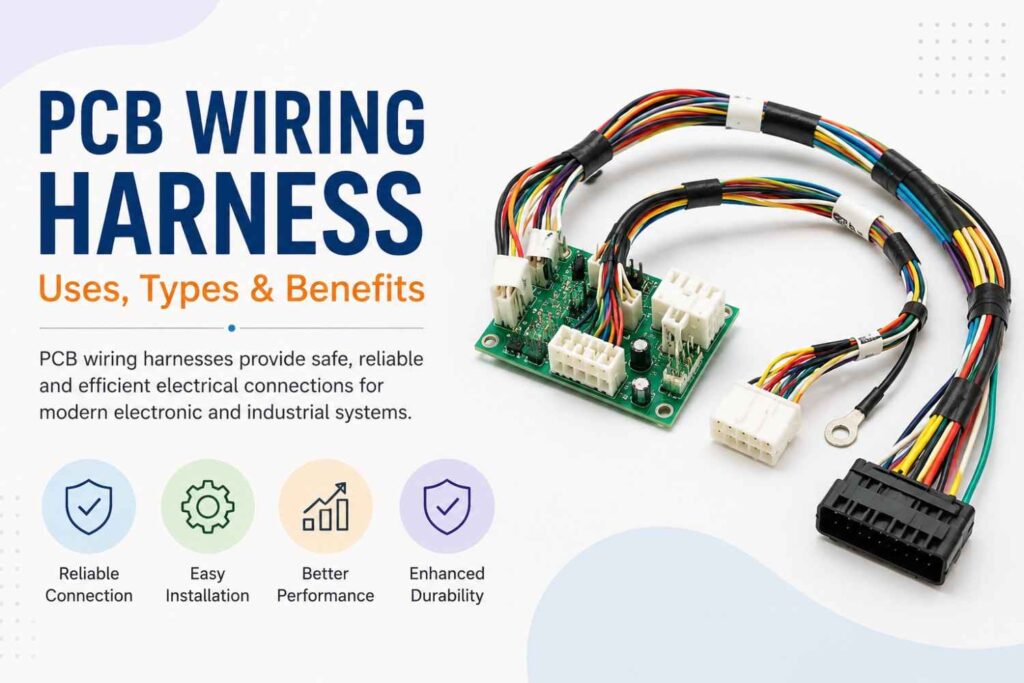
PCB Wiring Harness – Uses, Types & Process
The electronics and automotive industries are growing rapidly with the increasing demand for advanced electrical systems, smart devices, and automation technologies. Today, businesses are actively looking for reliable Wire Harness Product suppliers in Pune that can deliver high-quality and precision-engineered wiring solutions for industrial, automotive, and electronic applications. One of the most important components supporting these systems is the PCB wiring harness.
A PCB wiring harness helps organize multiple wires and connectors into a structured assembly that connects printed circuit boards (PCBs) with different electrical and electronic components. It ensures smooth signal transmission, safe electrical flow, and reliable system performance across various applications.
Modern industries such as automotive, consumer electronics, medical equipment, industrial automation, telecommunications, and electric vehicles depend heavily on PCB wiring harness systems for efficient electrical connectivity. These harnesses simplify complex wiring structures, improve safety, reduce maintenance issues, and enhance the overall reliability of electronic systems.
As technology continues to evolve, the demand for durable, compact, and high-performance PCB wiring harnesses is increasing globally. Manufacturers are now focusing on producing customized harness solutions that meet international quality standards while supporting modern electrical and electronic innovations.
What is a PCB Wiring Harness?
A PCB wiring harness is a structured assembly of wires, connectors, terminals, sleeves, and cables used to establish electrical connections between printed circuit boards (PCBs) and various electronic or electrical components.
In simple words, it acts as a bridge that allows electrical signals and power to flow between PCBs and connected devices.
Instead of connecting individual wires separately, multiple wires are bundled together into a single organized harness system. This improves:
- Safety
- Reliability
- Electrical efficiency
- Installation speed
- Maintenance convenience
PCB wiring harnesses are widely used in:
- Automotive electronics
- Consumer electronics
- Industrial machinery
- Medical equipment
- Telecommunications
- Power systems
- Robotics
- Aerospace systems
Why PCB Wiring Harnesses are Important
PCB wiring harnesses play a major role in ensuring smooth electrical connectivity and system reliability.
Let us understand why they are important.
1. Organized Electrical Connections
Electronic systems may contain dozens or even hundreds of wires. PCB harnesses organize these wires into a structured assembly, making systems cleaner and easier to manage.
2. Improved Electrical Reliability
A properly designed PCB wiring harness ensures:
- Stable signal transmission
- Reduced power loss
- Reliable electrical connectivity
- Better system performance
This is especially important in sensitive electronic applications.
3. Enhanced Safety
Loose or improperly connected wires can lead to:
- Short circuits
- Overheating
- Fire hazards
- Equipment failures
PCB harnesses use insulation and protective coverings to improve safety.
4. Faster Installation
Pre-assembled harnesses simplify installation during manufacturing and maintenance.
This reduces:
- Assembly time
- Labor costs
- Wiring errors
5. Easier Maintenance and Repairs
Organized wiring systems help technicians identify and repair problems quickly.
Benefits include:
- Faster troubleshooting
- Reduced downtime
- Lower maintenance costs
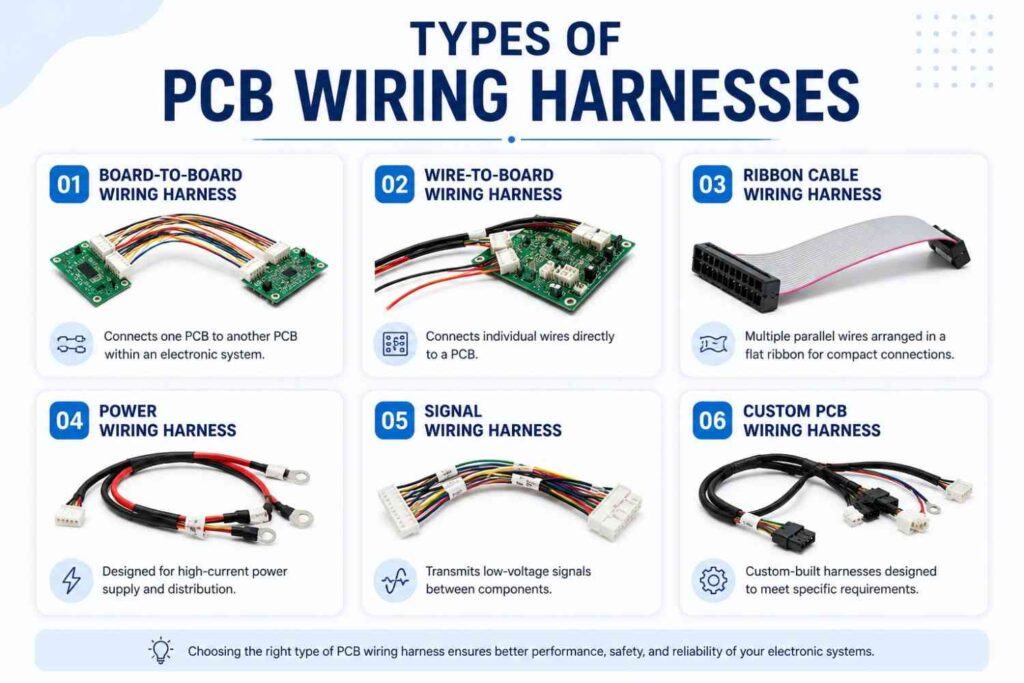
Why PCB Wiring Harnesses are Important
Different PCB wiring harnesses are designed for different applications and industries.
1. Board-to-Board Wiring Harness
This harness connects one PCB to another PCB within an electronic device.
Applications:
- Computer systems
- Industrial control systems
- Communication devices
2. Wire-to-Board Harness
This type connects wires directly to the PCB.
Applications:
Consumer electronics
Automotive electronics
Medical devices
3. Ribbon Cable Harness
Ribbon cable harnesses contain multiple wires arranged parallel to each other.
Benefits:
- Space-saving design
- Compact wiring
- Easy installation
Applications:
- Printers
- Computers
- Electronic control systems
4. Power Harness
Power harnesses are designed for high-current electrical transmission.
Applications:
Power harnesses are designed for high-current electrical transmission.
5. Signal Harness
Signal harnesses are designed for low-voltage signal transmission.
Applications:
- Sensors
- Communication systems
- Data transfer systems
6. Custom PCB Wiring Harness
Many industries require customized harnesses designed according to specific application requirements.
Custom harnesses offer:
- Better compatibility
- Improved efficiency
- Space optimization
PCB Wiring Harness Manufacturing Process
The manufacturing process of PCB wiring harnesses involves precision engineering and strict quality control.
Step 1: Design and Engineering
Engineers create wiring layouts based on application requirements.
They determine:
- Wire lengths
- Connector types
- Voltage requirements
- Routing paths
Step 2: Wire Cutting and Stripping
Automated machines cut wires to precise lengths and strip insulation from the ends.
Step 3: Crimping and Soldering
Terminals and connectors are attached using crimping or soldering techniques.
Step 4: Harness Assembly
Wires, connectors, sleeves, and clamps are assembled according to the design.
Step 5: Testing and Inspection
Continuity testing
Voltage testing
Resistance testing
Functional testing
Step 6: Packaging and Delivery
Finished harnesses are packed carefully and delivered to customers.
Future of PCB Wiring Harness Industry
The PCB wiring harness industry is growing rapidly due to advancements in technology and automation.
Growth of Electric Vehicles
EVs require advanced PCB harness systems for:
- Battery management
- Charging systems
- Power distribution
Rise of Smart Electronics
Smart devices and IoT systems are increasing demand for compact and high-speed harness solutions.
Automation and Robotics
Industrial automation is driving demand for reliable electrical connectivity solutions.
Miniaturization of Electronics
Compact electronic devices require smaller and more efficient harness designs.
Why Choose the Right PCB Wiring Harness Manufacturer?
Choosing the right manufacturer is essential for quality, durability, and performance.
A trusted manufacturer offers:
- ISO-certified production
- Advanced testing facilities
- Custom harness solutions
- High-quality materials
- Timely delivery
- Global quality standards
Sparsh Electronics specializes in manufacturing high-quality wiring harnesses and electrical connecting assemblies for automotive, industrial, and electronic applications. With a strong focus on quality and customer satisfaction, the company delivers reliable PCB harness solutions for domestic and international markets.
Conclusion
PCB wiring harnesses are an essential part of modern electrical and electronic systems. They provide organized, reliable, and safe electrical connectivity for various applications across automotive, industrial, consumer electronics, medical, and telecommunications industries.
As industries continue moving toward automation, smart electronics, and electric vehicles, the demand for high-quality PCB wiring harness solutions will continue to grow rapidly.
Choosing a reliable and experienced manufacturer ensures better performance, improved durability, enhanced safety, and long-term reliability for all electrical systems.
FAQs
1. What is a PCB wiring harness?
A PCB wiring harness is an organized assembly of wires, connectors, and terminals used to connect printed circuit boards with electrical components.
2. Where are PCB wiring harnesses used?
They are used in automotive, consumer electronics, industrial equipment, medical devices, telecommunications, and aerospace applications.
3. What are the benefits of PCB wiring harnesses?
Benefits include improved electrical performance, better safety, reduced installation time, lower maintenance costs, and enhanced durability.
4. What materials are commonly used in PCB harness manufacturing?
Copper wires, connectors, terminals, PVC insulation, protective sleeves, and clamps are commonly used.
5. Why are PCB wiring harnesses important in automotive systems?
They provide reliable electrical connectivity for sensors, dashboards, infotainment systems, and EV battery systems.
6. How are PCB wiring harnesses tested?
Manufacturers perform continuity, voltage, resistance, and functional testing to ensure quality and safety.
7. Can PCB wiring harnesses be customized?
Yes, manufacturers provide custom PCB harness solutions based on specific application requirements.
8. Why is choosing the right manufacturer important?
A trusted manufacturer ensures high-quality materials, proper testing, reliable performance, and long-term durability.